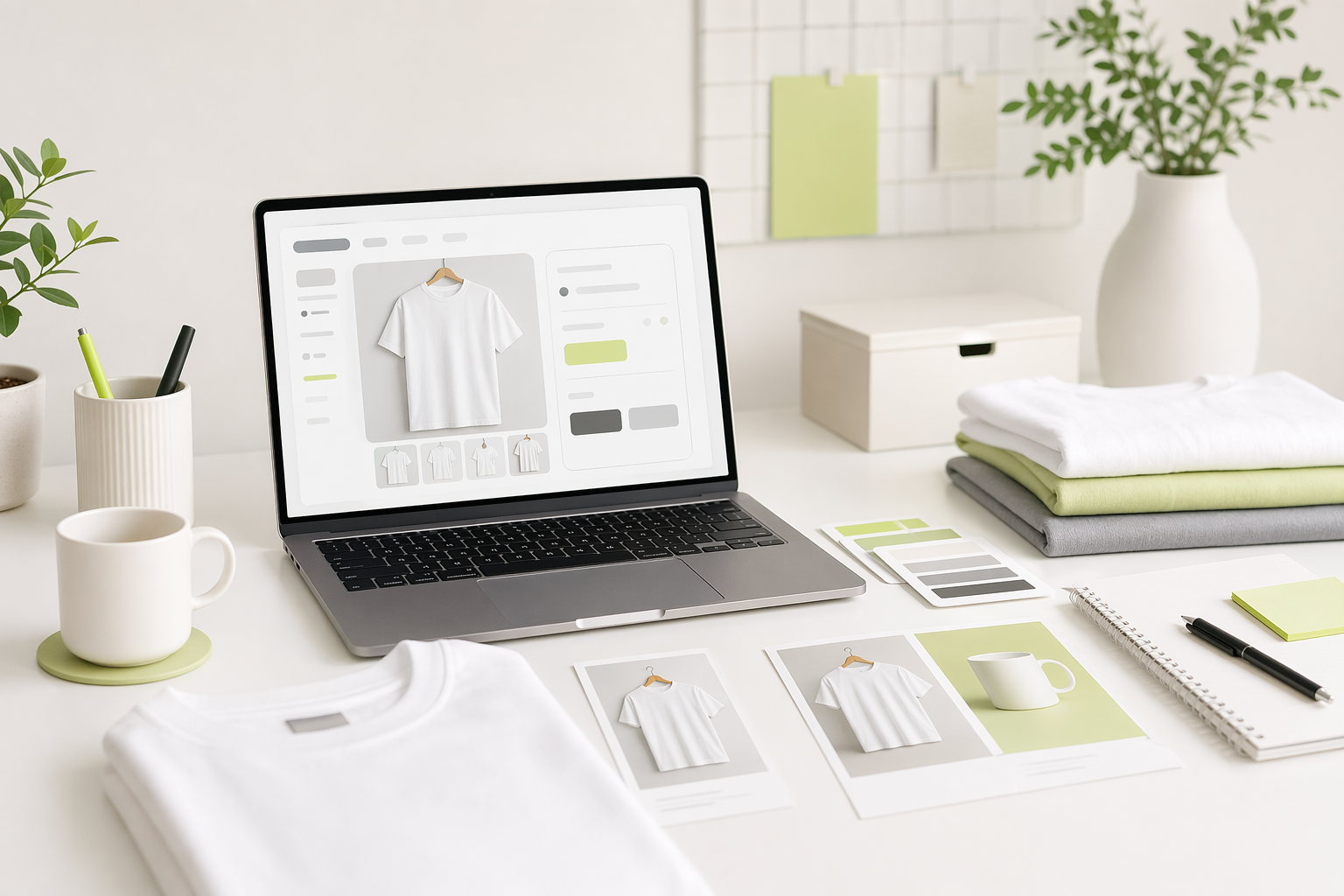
Starting a print-on-demand business feels bigger than it really is.
Most people do too much too early. They open five tabs, chase ten product ideas, spend three hours fixing one design, then disappear for two weeks because the process already feels heavy.
That is usually where momentum dies.
The better approach is smaller and far more repeatable: build one strong listing a day.
If you can give your store 20 focused minutes a day, you can build a real print-on-demand business over time. Not a chaotic side project. Not a folder full of unfinished shirt ideas. A business with compounding listings, better SEO, and cleaner product presentation.
The goal is simple:
- Find one clear buyer.
- Make one useful product idea.
- Present it with a clean mockup.
- Publish it with searchable copy.
- Repeat the same process tomorrow.
This is the exact workflow I would use if I were starting from zero today.
Why 20 minutes a day works better than weekend sprints
Print-on-demand rewards consistency more than intensity.
One listing rarely changes your business. Fifty well-positioned listings can. A hundred gives you data. A few hundred starts giving you leverage.
That is why the daily approach works:
- You publish more often.
- You learn what niches get clicks.
- You improve your titles, tags, and mockups faster.
- You build catalog depth without burning yourself out.
If you add just one listing a day, that turns into:
- 30 listings in a month
- 90 listings in three months
- 365 listings in a year
That is how a profitable print-on-demand business usually gets built in real life. Quietly. Repeatedly. Without drama.
The 20-minute print-on-demand workflow
Here is the full daily system:
| Time block | What to do | Why it matters |
|---|---|---|
| 5 minutes | Pick one niche and one buyer | Better positioning, less competition |
| 5 minutes | Create or adapt one design direction | Faster production and stronger catalog consistency |
| 4 minutes | Write the title, tags, and first lines of the description | This is where print-on-demand SEO starts |
| 3 minutes | Make the mockup and launch creative look clean | Better click-through rate |
| 3 minutes | Publish and note the next variation | Keeps momentum going tomorrow |
That is it. No giant content calendar. No perfection spiral.
Step 1: Choose one product and one audience
A lot of beginners start with product-first thinking:
- Should I sell hoodies?
- Should I do mugs?
- Should I add hats too?
That is backwards.
Start with one audience and one clear product angle.
If you are new, a tee is still the easiest place to start because it is familiar, flexible, and easy to test. What matters more is who the product is for.
Instead of making a generic "funny dad shirt," narrow it down:
- Fishing dad
- Dentist dad
- Gamer dad
- Electrician dad
- Teacher dad
A useful niche filter is:
- Can I name the buyer in one phrase?
- Would that buyer understand the design immediately?
- Is there a gift occasion or identity behind it?
- Can I make five more variations from the same idea?
The narrower you go, the easier it becomes to write a listing that actually matches what people search for.
That is the first big shift from random POD ideas to a real print-on-demand business strategy.
Step 2: Use cross-niching so your listing has room to rank
If your niche is too broad, you disappear into the crowd.
If your niche is too obscure, nobody searches for it.
The sweet spot is usually a crossover:
- Identity + profession
- Identity + hobby
- Identity + life stage
- Profession + humor style
Examples:
- Dentist Dad Shirt
- Golf Mom Crewneck
- Nurse Graduation Gift
- Funny Electrician Hoodie
This works because it gives you:
- Stronger keyword relevance
- Clearer buyer intent
- Lower competition than generic gift phrases
- More angles for future variations
If you are trying to build a profitable print-on-demand business on Etsy or your own store, cross-niching is one of the highest-leverage habits you can build.
Step 3: Keep the design simple enough to repeat
Most beginner POD designs are not bad because the person lacks talent. They are bad because they try to do too much.
You do not need every listing to look like a custom poster commission.
Simple wins because simple is:
- Faster to make
- Easier to read on mobile
- Easier to adapt across niches
- Easier to test in volume
Before you publish, check the design against these points:
- Can the main phrase be read in a small thumbnail?
- Does the design have one obvious focal point?
- Is the style easy to repeat for another niche?
- Would the buyer understand it without extra explanation?
A line like this is enough to build around:
Husband. Dad. Dentist. Legend.
That kind of design is clear, giftable, and easy to repurpose into ten more niches.
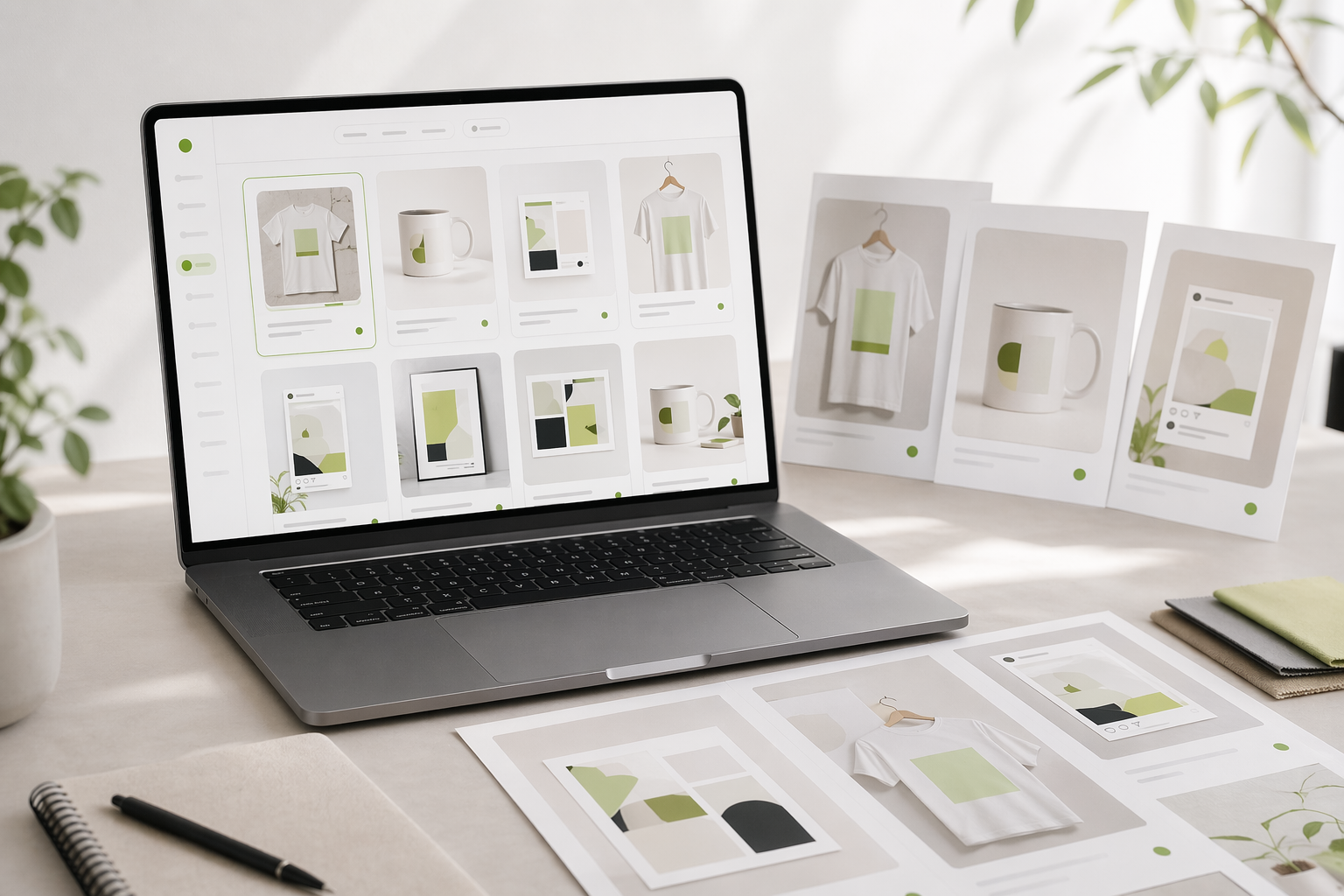
If you want to build the promotional side faster too, start from the Clunee template library and adapt one clean visual direction into multiple launch assets instead of redesigning everything from scratch every time.
Step 4: Make the product image and mockup do more of the selling
A weak mockup kills good ideas.
People decide fast. If the product image looks cheap, flat, badly cropped, or obviously generic, they keep scrolling.
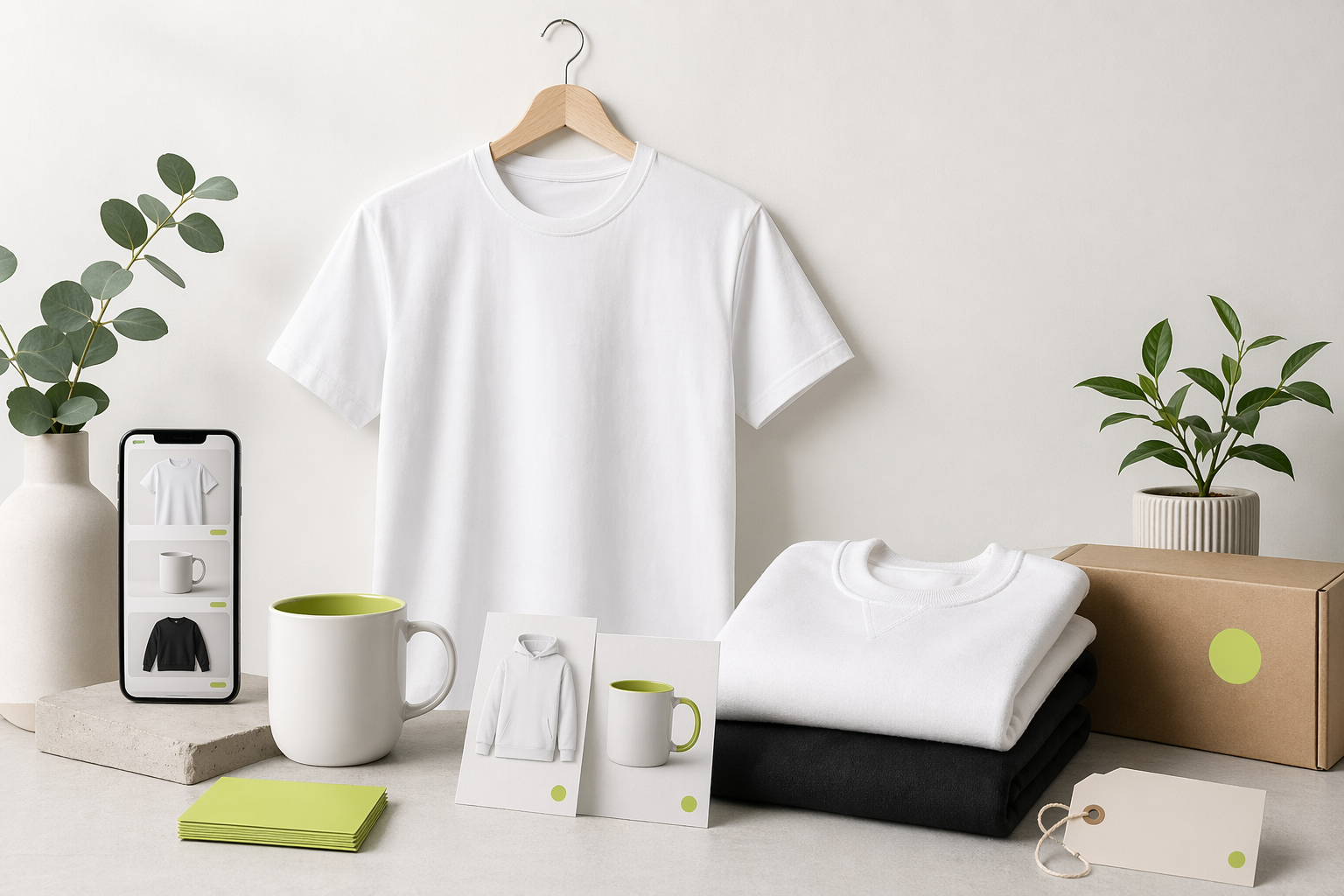
Your mockup should do three things:
- Show the design clearly
- Feel believable in the real world
- Match the buyer's taste
That does not mean you need a huge production setup. It means you need cleaner presentation.
For POD stores, that often means:
- Using brighter, more realistic previews
- Keeping the design placement consistent
- Removing distracting backgrounds
- Creating one or two social assets that support the listing launch
- Showing the product in a way that matches the buyer's taste
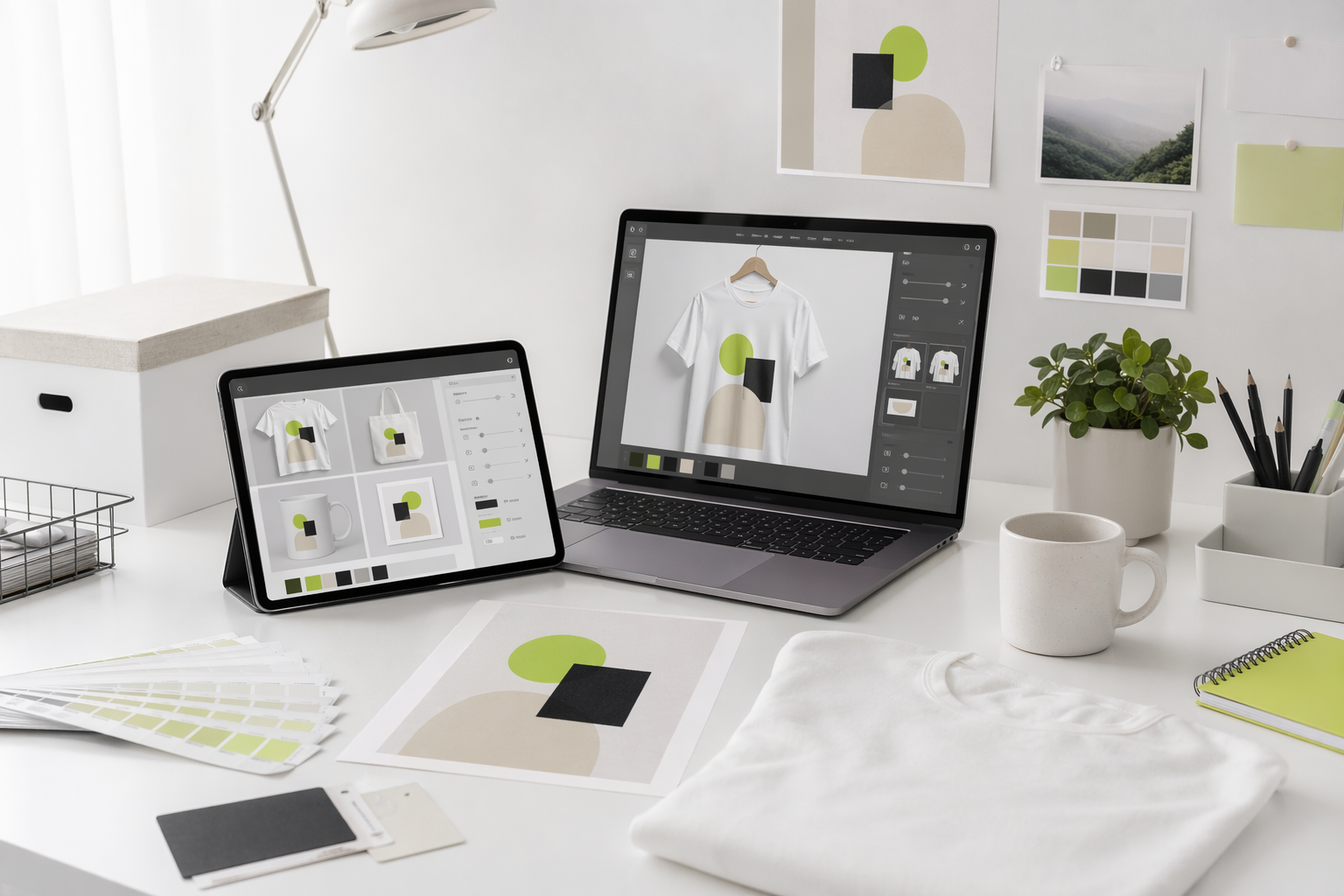
Inside Clunee, the studio and mockup workflow are useful for exactly this part of the process. You can clean artwork, refine imagery, and build supporting launch visuals from the same working direction.
Step 5: Write titles for search intent, not for your own notes
This is where a lot of Etsy print-on-demand sellers leave money on the table.
Your title is not there to describe what you meant. It is there to align with what the buyer is already typing.
If your product is a dentist dad shirt, your buyer is not searching:
- Cool shirt idea
- Custom design for men
- Funny graphic top
They are searching things closer to:
- Dentist dad shirt
- Dentist gift for dad
- Funny dentist shirt
- Father's Day gift for dentist
That means your title should naturally cover those phrases without sounding robotic.
A strong example:
Dentist Dad T-Shirt, Funny Dentist Gift for Dad, Father's Day Shirt for Dentist, Husband Dad Legend Tee
That is cleaner than keyword stuffing, but it still gives search engines and marketplace search enough signal to understand the listing.
For your description, the first few lines matter most. Use them to restate:
- Who the product is for
- What occasion it fits
- Why the design stands out
- What product the buyer is actually getting
- Why it makes a good gift
Step 6: Build variations from the same winning structure
This is where volume becomes manageable.
Once you have one strong concept, do not stop at one listing.
Turn the structure into a family of listings:
- Dentist Dad
- Teacher Dad
- Mechanic Dad
- Firefighter Dad
- Gamer Dad
You are not cloning lazily. You are building a structured catalog.
That is very different from random POD output because the system stays consistent:
- Same layout style
- Same keyword structure
- Same mockup quality
- Same buyer logic
- Same launch process
This is how you grow a store without starting from scratch every single day.
Step 7: Support the listing with simple launch content
If you want your products to move faster, do not rely on the marketplace alone.
Create a small launch loop around each new product:
- One Instagram post
- One Facebook post
- One lightweight promotional visual
- One story or short-form post if the product has a strong gift angle
You do not need a huge social strategy for this. You need visibility.
That is why I would connect each POD listing to a few simple supporting assets using Instagram post templates, Facebook post templates, or even a clean poster layout when I want a stronger promo image for a drop.
The goal is not to become a full-time content creator. The goal is to help one listing get more chances to be seen.
Step 8: Price for profit, not for false momentum
Low pricing feels safe when you are new. It is usually not.
Once production costs, platform fees, ad spend, and discounts start hitting the order, a cheap sale can turn into wasted effort.
A healthier question is:
What price leaves room for real profit and still feels fair to the buyer?
Before setting a price, account for:
- Product base cost
- Marketplace fees
- Payment processing fees
- Discounts or coupons
- Ad spend, if you use it
- The profit you actually want to keep
You do not need to be the cheapest option in your niche. You need:
- A clear audience
- A clean design
- A convincing mockup
- A listing that matches search intent
That combination gives you pricing power.
A realistic daily checklist for beginners
If you want something extremely simple to follow, use this:
Monday to Friday
- Find one niche crossover
- Build one design variation
- Upload one listing
- Create one mockup or promo visual
- Note the next variation for tomorrow
End of each week
Review:
- Which products got clicks
- Which titles feel weak
- Which niches deserve more variations
- Which mockups look noticeably better than the rest
- Which ideas are worth turning into a small product family
That weekly review matters because it helps you stop guessing.
What actually makes a print-on-demand business profitable
It is usually not one viral design.
It is not luck.
It is not a magical software stack either.
A profitable print-on-demand business is usually built on four things:
- Good niche selection
- Repeatable creative production
- Strong listing SEO
- Better product presentation than the average seller
That is why the 20-minute workflow works. It forces you to touch the parts that matter every day without getting buried in busywork.
Quick answers
Is 20 minutes a day really enough to start a print-on-demand business?
Yes, if the time is focused. Twenty minutes is enough to research one niche, create one variation, improve one listing, or publish one product. The power comes from repetition, not from one long session.
What is the best niche strategy for print on demand beginners?
Start with cross-niches that combine identity, profession, hobby, or gifting intent. They are usually easier to position than broad themes like "funny shirts" or "dad gift."
How many listings do I need before a POD store starts getting traction?
There is no perfect number, but most stores start learning faster once they have enough listings to compare patterns. That is why steady catalog growth matters more than obsessing over one product.
Do mockups really affect sales?
Absolutely. A stronger mockup improves the first impression, increases click-through rate, and makes the product feel more trustworthy.
Final thought
If you want to build a profitable print-on-demand business, stop waiting for the perfect week to get serious.
Build a small system you can actually repeat.
One niche.
One product.
One listing.
One better mockup.
Then do it again tomorrow.
That is how a store starts looking real.
And if you want the creative side to move faster, start with Clunee's templates, build cleaner promo visuals with the studio workflow, and pressure-test your first few launches before you spend months overthinking them.
Put the workflow into a real design.
Open Clunee when you are ready to turn the idea into a template, canvas, or mockup workflow.
Browse Clunee templates